
00:00
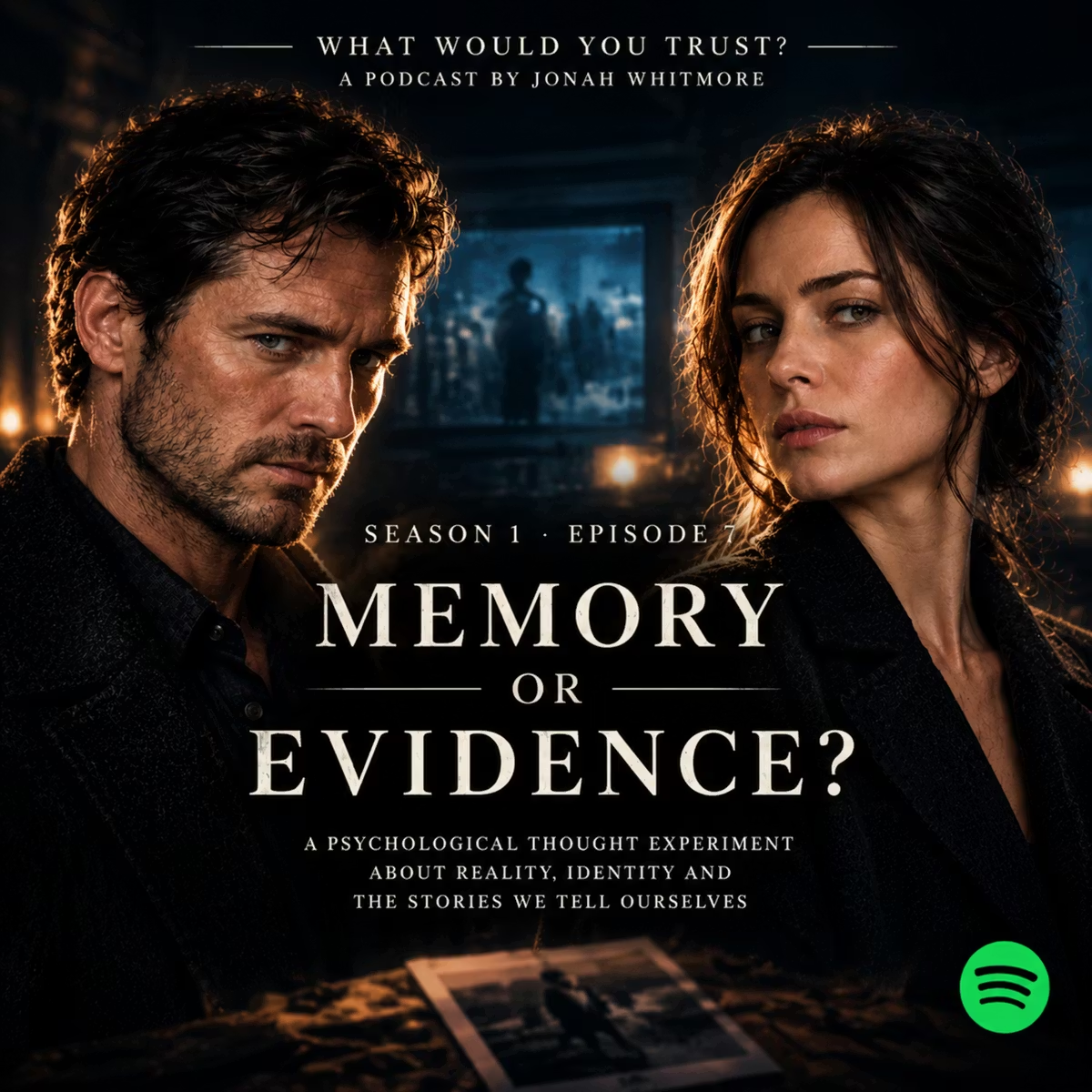
What would you trust? Your memory or the evidencein front of you?
It sounds like an easy question. Most of us wouldprobably say evidence, facts, proof. Because we
like to believe that reality is built on things wecan measure and verify. But there is a problem.
Almost everything we know about our own livescomes from memory. The people we love, the choiceswe
made, the moments that changed us. Our memoriesare the foundation of the story we tell ourselves
about who we are. So what happens when that storybegins to fall apart? What happens when your
strongest memory is real to you, but the evidencesays it never happened? Think about one of your
strongest memories. Maybe it is a childhoodmoment, a conversation, a person who changed yourlife.
You can probably remember where you were, what theroom looked like, maybe even what you felt.
That is what makes memories so powerful. They donot feel like guesses. They feel like returning to
a place that already exists. But memory is not arecording. It is not a video stored inside your
mind. Every time you remember something, yourbrain rebuilds that memory. And sometimes,
during that process, details can change. A memorycan become clearer while becoming less accurate.
Imagine this. Ten years ago, you made a decisionthat changed your entire life. Maybe you chose
a career because of one important moment. Maybeyou became a different person because of something
that happened. That memory became part of youridentity. Then one day, you discover evidence,
documents, photos, records, proof. The event youremember never happened. You were not there.
The conversation never took place. The moment thatshaped your entire life was built on somethingthat
was not real. What would you do? Would you rejectthe evidence? Or would you question yourself?
This is where the question becomes complicated.Because memories are not just information.
They are meaning. A fact can tell you whathappened. But a memory tells you what something
meant to you. Imagine someone says, you built yourlife around a moment that never happened.
Maybe they are right. But another questionremains. The person you became because of thatmemory,
is that person still real? If a false memoryinspired real choices, created real emotions,
and changed a real life, was the memory completelyfalse? Evidence protects us from believing things
that are not true. Without evidence, we couldbuild our entire reality on illusions.
Science depends on evidence. History depends onevidence. Justice depends on evidence.
03:01
Evidence gives us something outside ourselves.Something we can check. Something we can compare.
And that is incredibly important. Because ourminds are powerful. But our minds can also make
mistakes. But there is another side. A personwithout memory is not just missing information.
They are missing a connection to themselves. Ourmemories create continuity. They connect
yesterday's person with today's person. Theycreate our fears, our hopes, our relationships,
our dreams. So maybe memory is not about recordingthe past. Maybe memory is about creating a sense
of self. The story we carry inside our minds. Sowhat would you trust? Memory or evidence?
Maybe the answer is not as simple as choosing one.Because evidence tells us what happened.
But memory tells us who we became. Facts describereality. Memories create experience.
And human life exists somewhere between those twothings. Between the world that actually happened
and the world we carry inside ourselves. Maybe themost interesting question is not,
can we trust our memories? Maybe the deeperquestion is, if a memory changes the person
you become, does it matter whether it wascompletely true? Because sometimes the memories
that define us are not just records of the past.They are the foundations of the future we build.
This is What Would You Trust? I'm Jonah Whitmore.And the next time you remember something,
ask yourself, do you remember the event? Or do youremember the story your mind created?