
00:00
Imagine you have a memory you've carried with youfor years. You know where you were,
you remember the room, the people, maybe even theweather. You've never questioned it. Why
would you? It happened to you. Or at least, that'swhat you believe. Then one day,
someone says, that's not what happened. Youprobably laugh, because you know it happened.
You were there. You remember it. But then theyshow you something. A photograph, a message,
maybe even a video. And suddenly, you're not sosure. The evidence says one thing,
your memory says another. And I think that's whenthe really difficult question begins.
Not which one is correct, but which one would youtrust? Now think about something much smaller.
A birthday when you were a child. A conversationwith someone. A house you remember visiting.
You can almost see it. You remember where you weresitting. You remember someone talking to you.
Maybe you even remember what you were feeling. Butwhat if one detail is wrong? Not everything,
just one thing. Maybe that person wasn't there.Maybe the conversation happened differently.
Maybe it happened years later and your mindquietly moved it. Would you notice? Probably not.
And that's what bothers me about memory. Itdoesn't feel like a guess. It feels like a fact.
There's no warning. No little voice saying, becareful, you might be remembering thisincorrectly.
You just remember it. And because it feelsfamiliar, you trust it.
But here's where it gets uncomfortable. What if amemory can change without you noticing?
Not because someone is lying to you. Not becauseyou're trying to invent something.
You remember an event. Then, years later, youremember it again. And maybe something has
changed. A detail disappears. Another becomesclearer. Someone tells you their version. You
see an old photograph. And suddenly thatphotograph becomes part of your memory.
It's still your memory. At least, it feels like itis. But where did every piece of it come from?
That's the part I find strange. Because we usuallythink of memory as something stored inside us.
Something we can go back and retrieve. But mayberemembering isn't quite like opening a file.
Maybe every time we remember something, we arerebuilding it. And if that's true,
how much of what we remember is actually theoriginal event?
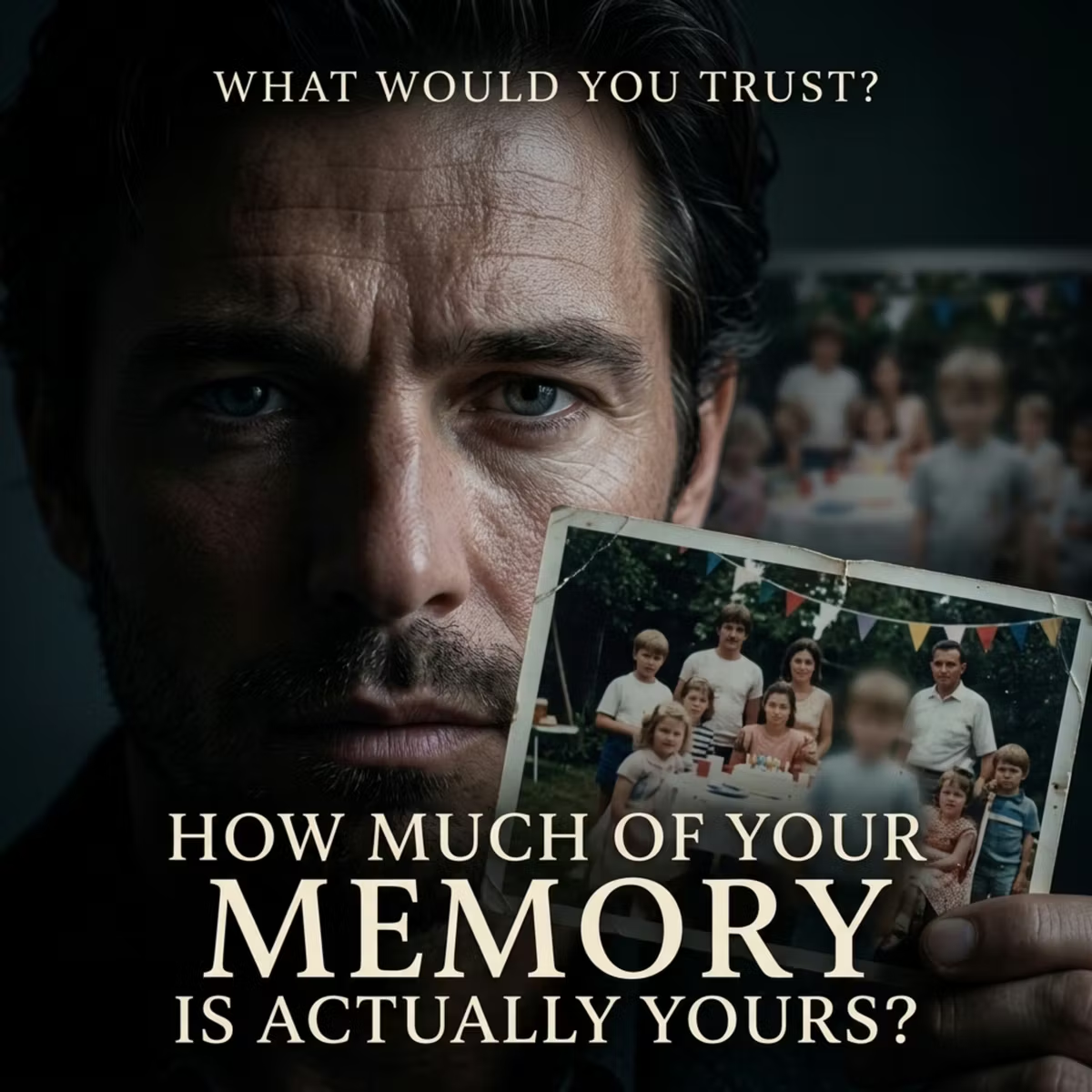
Imagine someone shows you a photograph from yourchildhood. You recognize the place immediately.
You recognize the people. But there's a problem.You remember being somewhere else that same day.
And you don't just vaguely remember it. You cansee it. You can almost feel it.
03:01
So what do you do? You'd probably trust thephotograph. I think I would too. But would I?
Because the photograph only shows one moment. Yourmemory gives you everything around it.
The sounds. The conversation. What you thought.What you felt. The story. And sometimes,
the story feels more real than the evidence.That's what makes this difficult. Maybe the
question isn't simply, are my memories true? Maybeit's, how much of a memory is actually mine?
And if you discovered that one important memorywas wrong, would you want to know?
Think about the memories that helped make you whoyou are. Your childhood. Your mistakes. Someone
you loved. Something you regret. A moment youbelieve changed your life. Now imagine finding
out that one of those memories isn't quite right.Maybe the person you remember wasn't there. Maybe
the conversation never happened that way. Maybesomething you thought happened to you actually
happened differently. Would that change who youare? I honestly don't know. And maybe that's the
unsettling part. Because if you remove a memory,you're not just removing a moment from the past.
You might be removing part of the story you tellyourself about who you are.
So here's the question. If your memory tells youone thing, and the evidence proves something else,
which one do you trust? And if your memory stillfeels completely real,
would you really be able to let it go?


