
00:00
Think about a memory you have never questioned.Maybe you remember a room from childhood,
a birthday, a conversation, someone standingbeside you. You can see it in your mind so
clearly that asking whether it really happenedalmost feels ridiculous. Of course it happened.
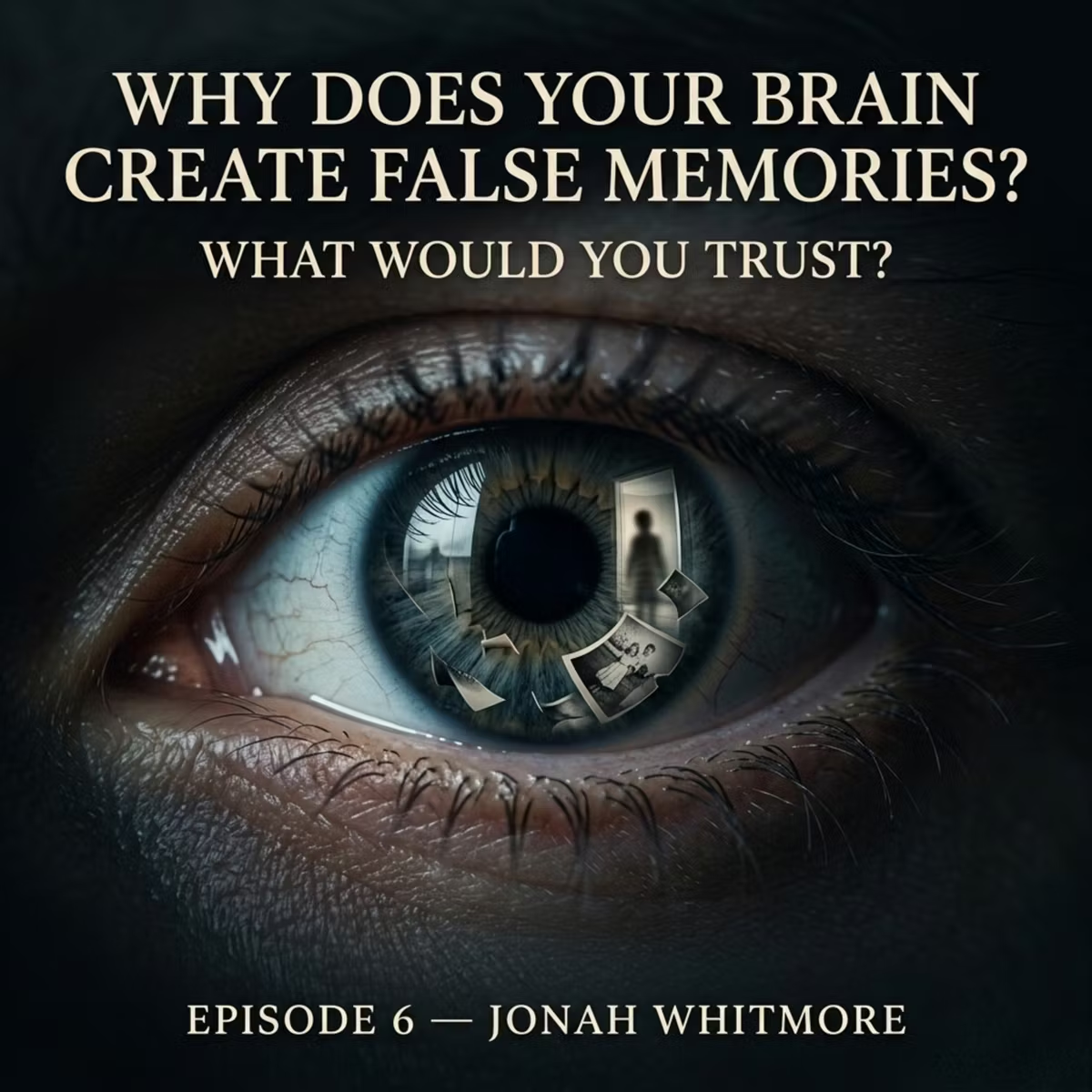
But here's the strange thing about memory. Yourbrain can give you the feeling of remembering
something that never actually happened. Not avague feeling, a real memory. With details,
with emotion, with certainty. And you may neverknow that it's wrong.
We often imagine memory as a recording. Somethinghappens, the brain stores it,
and years later we play it back. But memory isn'ta recording. It's a reconstruction.
Every time you remember something, your brainrebuilds it. And sometimes,
information from outside can become part of thatreconstruction.
Imagine someone repeatedly telling you aboutsomething that supposedly happened when you
were a child. At first, you don't remember it.Then you hear the story again. You picture the
place. You imagine what it felt like. Eventually,the story may stop feeling like something you
were told. It starts feeling like something youremember. And that's the unsettling part.
Your brain doesn't necessarily tell you where thememory came from. It simply gives you the feeling,
I was there. And this matters because memoriesaren't just records of the past.
They help create the story of who we are. Youremember what happened to you, who betrayed you,
who loved you, what you did, what you regret, whatyou survived. Those memories become part
of your identity. So what happens when one of themis wrong? Maybe nothing. Maybe the mistake
is insignificant. But what if the memory changedthe way you see yourself? What if you trusted
someone because of something you remembered? Whatif you feared something because of something you
remembered? What if part of the story you've beentelling yourself was built on something that
never happened? We trust memories because theyfeel like evidence. But if your brain can create
a memory that never happened, what else do youtrust simply because it feels true?
This is What Would You Trust? I'm Jonah Whitmore.


