
00:00
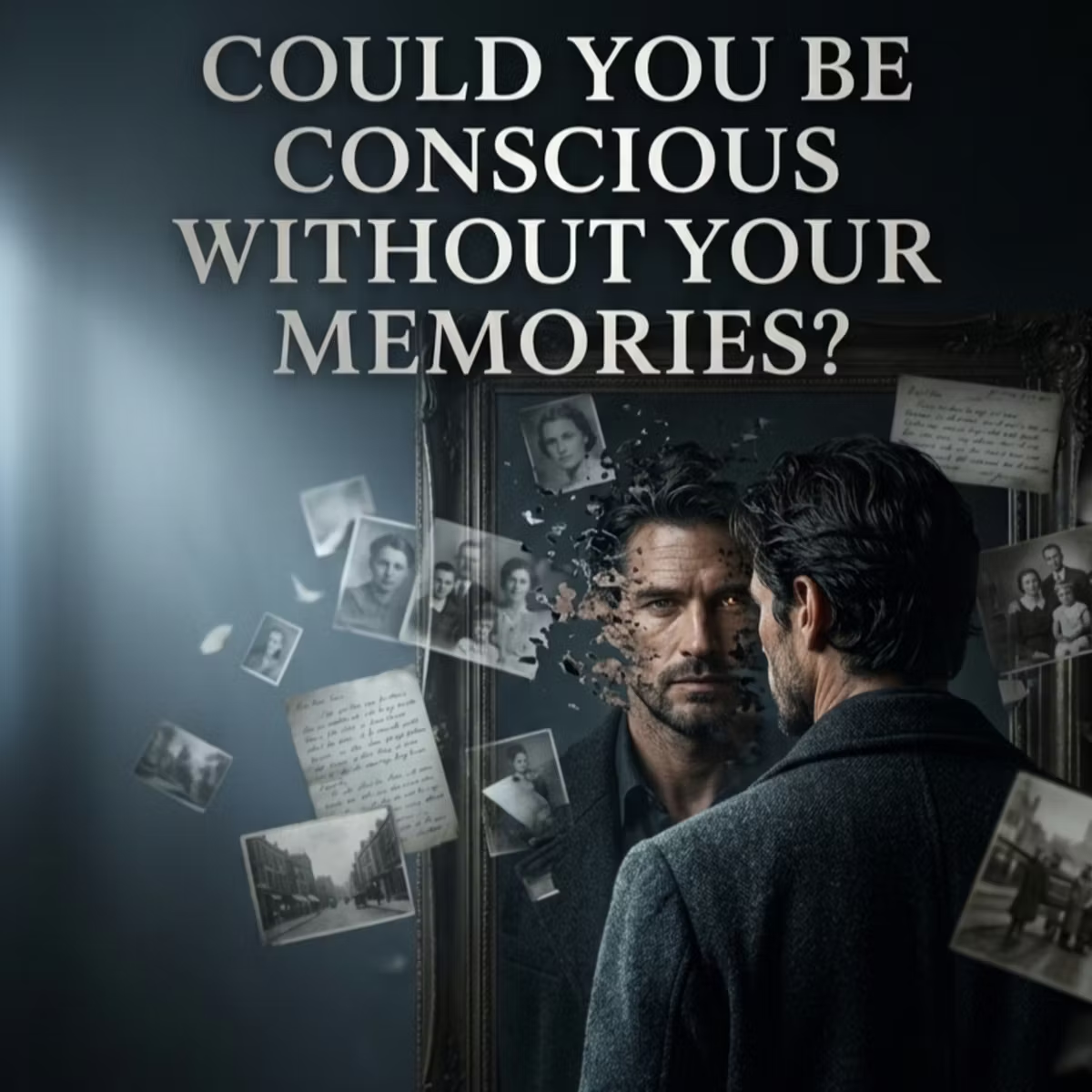
Imagine waking up tomorrow with no memories. Youdon't remember your childhood. You don't
remember the people you love. You don't rememberwhat happened yesterday or even who you were
before you went to sleep. But you're awake. Youcan see the room. You can hear the sound
of your own breathing. You can feel that somethingis happening, even if you have no
idea how you got here. So here's the question. Areyou still conscious? And if you are,
what exactly has disappeared? Your past? Youridentity? Or something deeper?
We often talk about memory as if it's thefoundation of the self. It's how we explain
who we are and why we became this person. But ismemory the same thing as consciousness?
Or can one exist without the other? Think aboutthis for a second. Right now,
you're experiencing something. Maybe you'relistening to me while walking, sitting at home,
or doing something else entirely. You don't needto remember your entire life to hear
these words. You don't need to recall yourchildhood to notice a sound or feel the
temperature of the room. Experience is happeningnow. Memory connects this moment to other moments.
It gives you a sense of continuity. It helps yourecognize a face, understand a situation,
and make sense of your own story. But theexperience itself is not quite the same as
remembering it later. A moment can happen beforeyou've had time to turn it into a memory.
And that raises a strange possibility. Perhapsmemory helps explain the person who is conscious
without being the only thing that makesconsciousness possible.
Now imagine that every memory of your pastdisappeared. You could no longer tell someone
where you grew up. You wouldn't recognize your ownphotographs. You might not know the names
of the people closest to you. That would changealmost everything about how you move through the
world. But would it mean there was no one there?Not necessarily. You might still feel fear,
curiosity, comfort, confusion. You might stillnotice another person reaching out to help you.
Of course, losing memory can affect a person'sabilities, awareness, and sense of self in very
real ways. This isn't something we can reduce to asimple thought experiment. But there's a
distinction worth considering. Losing access toyour personal history is not automatically the
same as losing all conscious experience. Maybe thestory of who you are can disappear, while the
experience of being here continues. And this iswhere I want to take the question a littlefurther.
How much of the person you believe yourself to becomes from the memories you carry? Not just the
big events. The ordinary ones, too. A conversationyou still think about. A moment when someone made
you feel small. Something you were told aboutyourself so often that you eventually accepted
it as true. Your memories don't simply preserve apast. They help you interpret it. And the way
03:04
you interpret that past can shape what you believeabout yourself today. That's one reason I created
The Memory Investigation, a practical workbook forexploring your memories. Its guiding idea
is simple. Your memories tell a story. Learn toexamine it. It's an invitation to slow down, ask
better questions, and look more carefully at thememories that have helped shape your understanding
of yourself. Not to assume every memory is false.And not to replace your memories with a new story.
Just to examine the story you already carry.
So, could you be conscious without your memories?Maybe the more difficult question is this.
If your memories disappeared, what would remain ofthe person you call yourself?
Your experiences might still be happening. Yourfeelings might still matter. You might still be
able to form new connections and create newmemories. But the story connecting you to your
former self could be gone. Would that make you adifferent person? Or would it reveal that being a
person involves more than the story you remember?You don't have to settle that question today.
If you'd like to explore your own memories moredeliberately, look for The Memory Investigation,
a practical workbook for exploring your memories,by Jonah Whitmore. I'll include the link in the
episode description. And next time, we'll godeeper into the question of what makes you the
same person from one day to the next. This is WhatWould You Trust? I'm Jonah Whitmore,
and I'll leave you with one question. If your pastdisappeared, would you still feel like you werehere?