
00:00
Have you ever trusted someone for so long that youstopped asking whether they deserved it?
Maybe you noticed something. A small lie. A brokenpromise. An explanation that didn't
quite make sense. You felt that something waswrong. But then you found a reason to dismiss it.
Maybe they were tired. Maybe you misunderstood.Maybe there was something you didn't know.
And just like that, the doubt disappeared. Atleast for a while.
But here's a question. Were you trusting thatperson? Or were you trying to protect the belief
that you could trust them? Because those twothings aren't always the same.
When we trust someone, we accept a certain amountof uncertainty. We can't know everything about
another person's thoughts, intentions, or choices.Trust means accepting that risk.
But sometimes, something changes. The evidencebegins to point in one direction,
and we keep looking for another explanation. Notbecause the alternative is more convincing.
Because it's easier to live with. Imagine thatsomeone close to you has
lied to you several times. Each time, there's anexplanation. And sometimes,
the explanations are reasonable. People makemistakes. People hide things because they're
afraid. People can hurt others without fullyunderstanding what they're doing.
One lie doesn't necessarily tell you everythingabout a person.
But what happens when the same pattern keepsreturning? At what point does giving someone
another chance become refusing to see what'shappening? It's a difficult question,
because trust isn't just about the other person.It's also about us.
Perhaps you've spent years believing that someoneis honest. You've defended them.
You've told other people they could be trusted.You've built decisions around that belief.
Then, the evidence begins to challenge it. Now,you face something uncomfortable.
If you accept what you're seeing, you may have toreconsider not only that person,
but your own judgment. You may wonder why youdidn't notice earlier. Why you believed
the explanations. Why you ignored the things thatnow seem obvious. And suddenly, continuing to
trust feels less painful than admitting you mighthave been wrong.
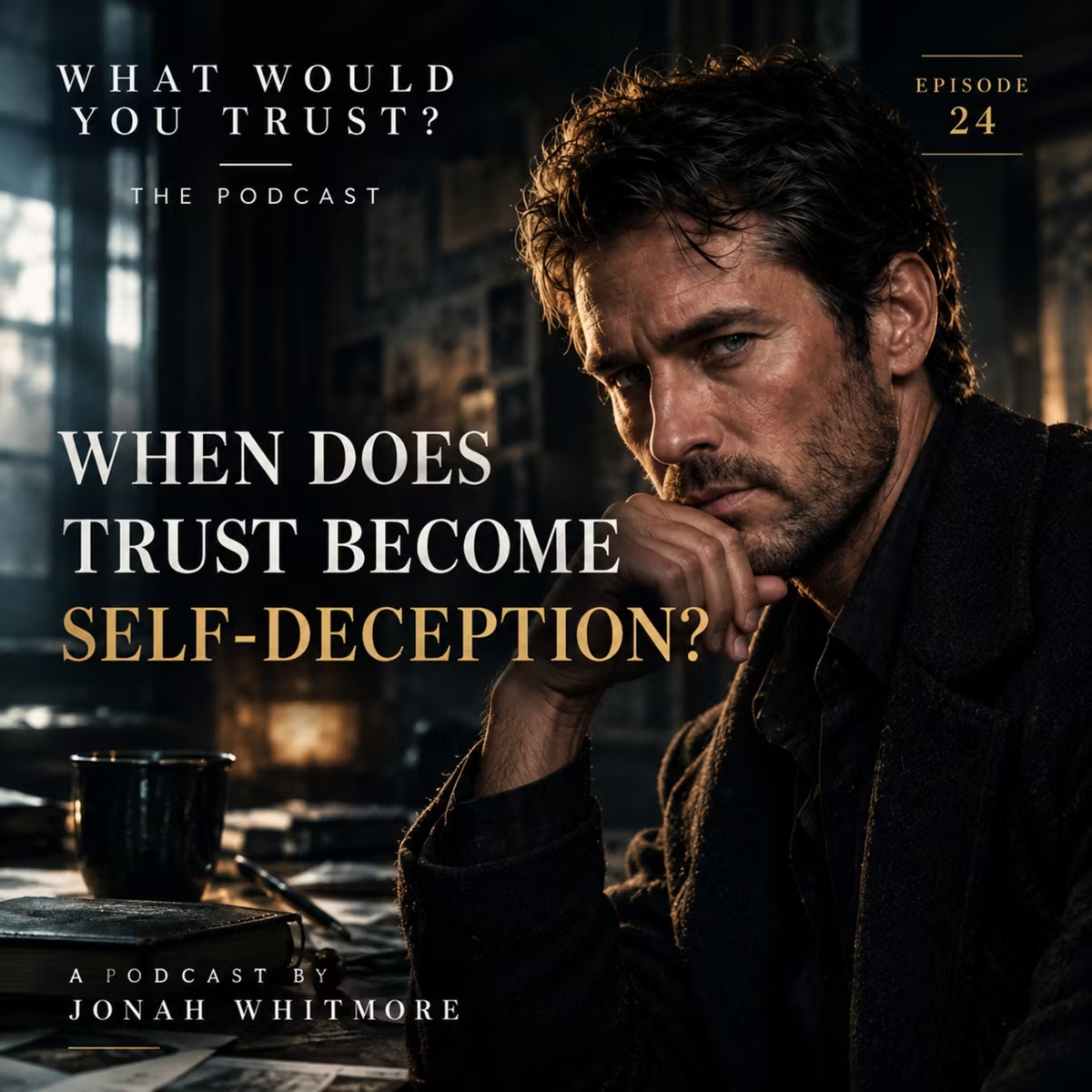
This is where trust can become self-deception. Notbecause trusting someone is foolish. And not
because every doubt means something is wrong. Ithappens when protecting a belief becomes
more important than understanding the truth. Webegin to choose which details matter. We
remember the promises, but minimize the brokenones. We focus on the moments when the person was
kind and explain away the moments when theiractions contradicted their words.
We don't necessarily invent a completely differentreality. Sometimes, we simply keep looking at the
parts that make our existing reality easier tobelieve. And perhaps the most difficult part
is that we may not realize we're doing it. We tellourselves we're being patient.
03:04
We're being loyal. We're refusing to judge someonetoo quickly. Those can be good things.
But patience can become avoidance. Loyalty canbecome an excuse. And giving someone the benefit
of the doubt can become a way of denying ourselvesthe right to question what we see.
So how do we tell the difference? Maybe the answerisn't to stop trusting people.
Maybe it's to pay closer attention to what happenswhen our trust is challenged.
Can we ask a difficult question withoutimmediately defending the person?
Can we acknowledge a pattern without pretending weknow every reason behind it?
Can we care about someone and still recognize thattheir behavior is hurting us?
Trust doesn't require us to ignore evidence. Andchanging our minds doesn't mean that every moment
of trust before that was meaningless. Perhaps wetrusted someone sincerely with the information
we had at the time. Perhaps we gave them chancesbecause we believed people could change.
That doesn't make us foolish. But once we begin tosee a pattern clearly,
we have a choice. We can keep protecting the storywe wanted to believe. Or we can allow
new evidence to change what we believe now. Andthat choice can be painful. Because sometimes,
the hardest person to stop deceiving is ourselves.So let me leave you with one question.
When you keep trusting someone despite everythingthat makes you doubt them,
what are you really protecting? Your relationshipwith that person?
Your belief in who they are? Or your belief inyour own judgment?
Perhaps trust is not measured by how long we'rewilling to believe.
Perhaps it's measured by whether we're willing tolook honestly at what we believe,
even when the truth asks us to change our minds.
This is What Would You Trust? Until next time,question what seems certain.
And remember that sometimes, the most importantquestion isn't whether
someone else is telling the truth. It's whetherwe're ready to see it.


